
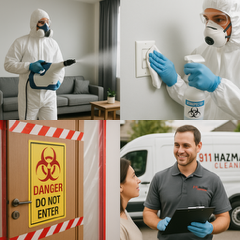
Hantavirus cleanup is not the same thing as a routine rodent cleaning, and understanding that difference could genuinely protect your family or your tenants. If you’ve discovered signs of a rodent infestation in an attic, crawl space, or storage area, the instinct might be to grab some gloves and get to work. But depending on what kind of rodents were present and how long they had access to the space, that approach can be seriously dangerous.
Why Hantavirus Changes Everything
Hantavirus is a potentially fatal respiratory illness carried by certain wild rodents, most commonly deer mice. The virus lives in rodent urine, droppings, and nesting material, and it becomes airborne when those materials are disturbed. That’s the critical point. Simply sweeping or vacuuming a contaminated area can send microscopic viral particles into the air, where they can be inhaled without any warning. Symptoms may not appear for weeks, which makes the exposure even harder to trace.
Standard rodent cleaning, on the other hand, is what most people picture: clearing out droppings, wiping down surfaces, maybe replacing some insulation. When rodents haven’t been present long, when the species involved are low-risk, and when there’s no reason to suspect Hantavirus exposure, a careful general cleaning with proper gloves and a basic respirator may be appropriate. The key word there is “may.” Even in lower-risk situations, many homeowners are surprised by how easy it is to make things worse.
The Practical Differences in How These Cleanups Are Done
When a potential Hantavirus situation is identified, the response has to be methodical. Our team follows a proprietary 6-step bio-remediation forensic cleaning process that addresses contamination at every level, not just what’s visible on the surface.
Containment comes first. In a confirmed or suspected Hantavirus cleanup, the affected area is isolated to prevent cross-contamination with the rest of the structure. Negative air pressure and full PPE, including respirators rated for airborne biohazards, are standard. No one should be walking in and out of that space casually.
Disinfection comes before removal. This is one of the most important distinctions. In standard rodent cleaning, you might wipe things down after removing debris. In Hantavirus remediation, contaminated materials are thoroughly wetted with EPA-compliant disinfectants before they are touched or moved. This suppresses any airborne spread before the physical removal even begins. All materials are then bagged, sealed, and disposed of in compliance with OSHA, EPA, and Department of Transportation requirements.
Insulation replacement is often part of the picture. Rodent droppings and urine soak into insulation deeply, and no amount of surface cleaning makes that material safe or effective again. We see this frequently in attic remediation work across Sacramento County, West Sacramento, and Palo Alto, where older homes sometimes have rodent activity that went undetected for extended periods.
After the cleanup is complete, we provide detailed insurance documentation reports, which can be valuable for homeowners and property managers working through claims or preparing a property for sale.
When Should You Assume the Worst?
You don’t have to confirm a Hantavirus case to justify a professional response. If you’re seeing heavy rodent activity, if the infestation appears long-standing, or if the space is poorly ventilated (think attics, crawl spaces, and enclosed storage areas), treating it as a potential hazmat situation is the right call. The consequences of assuming it’s fine and being wrong are simply too serious.
We’ve served clients in Sacramento, San Francisco, Fresno, Palo Alto, West Sacramento, and surrounding areas for over 15 years, helping more than 11,800 people navigate situations exactly like this. Some of those calls come from homeowners; others come from property managers, landlords, and businesses dealing with an infestation aftermath. All of them get the same careful, thorough response.
What You Should Do Right Now
If you’ve discovered rodent activity and you’re not sure how serious the risk is, please don’t start cleaning on your own before you have more information. Our team is available 24/7 and can help you assess the situation quickly. We’ll be honest with you about what level of response makes sense, and we’ll walk you through every step of the process.
Give us a call or drop us an email with any questions. We’re here to help, and there’s no pressure to have it all figured out before you reach out.